
Learn the best times to buy and sell in the East Bay
How the East Bay Market Tracks with the Seasons
As you may know, the real estate market operates seasonally -- different amounts, types and prices of homes become available at different times of the year in a seasonal pattern.
By understanding this pattern, homebuyers and sellers can time the market to give them a leg up.
For example, in January and February, by far the slowest real estate months of the year, buyers can shop for homes with relatively lower competition from other buyers (but also less inventory) and sellers can stand out in ways that are more difficult in more active months (but with less buyers).
Of course, the best strategy for each real estate consumer depends on her specific circumstances, the particulars of her life situation, property characteristics, location and more. This is where a great agent can be an invaluable asset. Reach out for a free consultation here.
Activity dips in the summer, when buyers and sellers travel and enjoy the long days. After Labor Day, the market heats up again. In fact, new listings double for the four to six weeks after Labor Day and then taper heading toward Thanksgiving.
This means buyers and sellers should always take seasonality into account when they plan to list or buy. If a seller has a fixer-upper in a good location, she might want to list outside of a high-listing season so that her home faces less competition from other homes on the market.
Spring is peak season. As the East Bay shakes off the rainy season, and the Eucalyptus trees begin to leaf out, the prime inventory hits the market. Sold prices tend to peak at this time, when the bigger, more desirable properties hit the market. In addition, average days-on-market go down and prices jump higher over asking at this time.
East Bay Real Estate Seasonality
In short, the weather and holidays drive East Bay real estate market seasonality. Action is highest when the weather is best, when homebuyers and sellers are not on vacation or consumed with holidays, and when kids are in school (which means families are in town).
Generally, sales peak in the spring (in the months April, May and June) and then rise again in the fall (September and October). At these times, kids are in school, buyers and sellers are in town with more settled schedules.
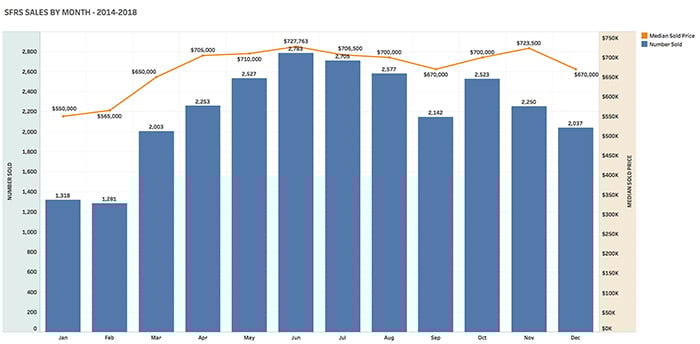
Source: Red Oak Analysis of MLS data.
Similarly, if buyers want to shop with less competition (and perhaps not prime inventory), they can potentially get better deals on homes in peak summer, but more likely in winter months of January and February.
Current Anomaly
Like everything, there are exceptions to this seasonality pattern. And this year we have one.
The percentage of listed homes that have remained on the market for five weeks or more stands at 35 percent, a jump of five percentage points from last year. After years of low inventory, listings are missing offer dates and experiencing price reductions.
This means buyers have an opportunity to take advantage right now of a market flooded with inventory, which means they have more homes to choose from, better leverage and less competition from other buyers.
On the other hand, sellers, if they can, should consider delaying listing their home, or making sure that it hits the market priced to sell.
If you need help navigating the East Bay fall or winter selling season, reach out to us for a free consultation.