When Home Transcends 'Single-Family'
Most of us in the East Bay live in homes with our nuclear families, but not all. What if you decided to live with your friends, too?
That's exactly what some East Bay residents choose. They navigate the intimate business of living with their partners, parents or children, but also those outside it, in intentional communities. They transcend the predominant image of families living in nuclear units in single-family homes, condos or apartments.
The East Bay’s grand Victorians (and other homes, of course) have always hosted communities of roommates, some more organized than others. In this post, we highlight the latter -- shared housing that formalizes the living relationship between unrelated members to a greater degree.
These living situations vary from independent, personal arrangements between just two people or families to those at higher scales with a corporation or group providing a more organized framework for organizing how more than one family shares a property as home. While not always the case, living in intentional communities can be a more affordable way to live in the East Bay.
Collaboration lives at the heart of these arrangements, which, of course, can vary greatly. In some cases, co-living inhabitants share chores and kitchen space, in others they live more independently and share expenses for upkeep of shared property and amenities.
Intentional Communities in the East Bay
Intentional communities come in two flavors: cohousing, with individual homes clustered together in a tight-knit community with more privacy, and co-living, where up to 30 people can share a large house, including all common areas. Cohousing communities tend to offer more permanent living situations than co-living, which can have higher turnover rates.
Residents find these communities in a variety of ways, including by visiting
Cohousing California or by participating in the
East Bay Cohousing Meetup group, which covers student coops, collective and co-living households, urban and rural eco-villages, faith-based or service-oriented, moshads, Kibbutzes and income-sharing communes.
Typically, cohousing developments have between 15 and 40 homes. We profile a few East Bay cohousing communities below.
Berkeley Cohousing
Credit: Flickr/Complicated
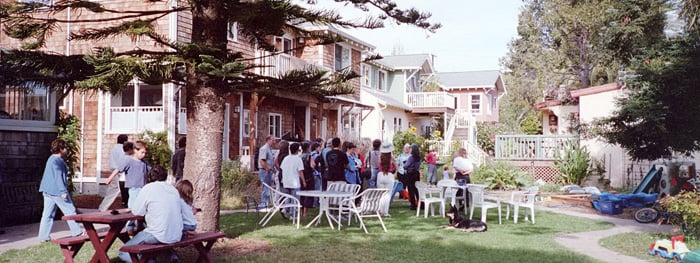
Established in 1994, Berkeley Cohousing has 15 units (cottages and duplexes) in 10 buildings on a former farm in West Berkeley. The 0.8-acre community has an arrangement with the city that keeps price appreciation of the community’s homes below market value; they currently go for approximately 50 percent below market rate, but buyers must meet certain low-income requirements and pass a community interview.
The community has approximately 34 adult and nine child members, and, like many cohousing communities, features a common house where joint meals and gatherings take place.
Members in each housing unit pay between $300 and $400 each month in community dues, which covers the cost of group meals (which occur from two to five times each week) and other upkeep needs; all members participate in cleaning and cooking duties. Members also make decisions based on consensus, which can be supplemented by a vote if necessary.
Temescal Commons
Source: Flickr/Joe House
Founded in 2000, Temescal Commons is a nine-unit cohousing community in Oakland’s Temescal neighborhood, home to 21 residents on just under half an acre. Originally formed by members of a Christian church seeking to live their faith more actively in daily life, the community has since evolved into an interfaith group grounded in three core values: radical hospitality, community, and sustainability—welcoming everyone with kindness and respect.
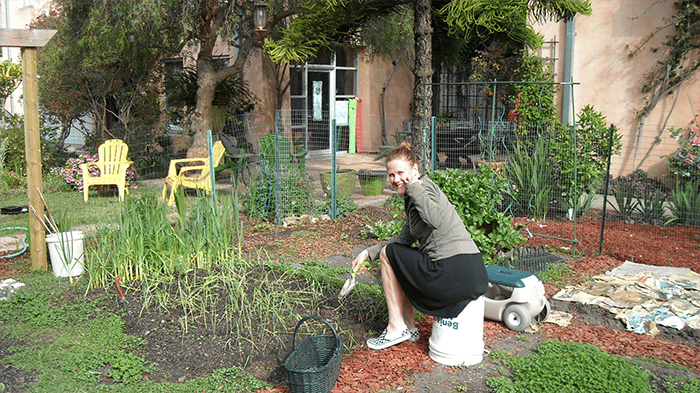
The property spans three combined lots and features mature fruit trees, a vegetable garden, and a well-known blackberry bush along the street. Homes vary in size and style, with a focus on sustainable design, including solar panels. A central courtyard serves as the hub of daily life, complemented by shared amenities such as a laundry room, tool and bike sheds, an exercise space, and a large communal kitchen and dining area.
Community life is anchored by a shared Sunday meal, rotating between potlucks and hosted dinners, along with monthly workdays to care for the property. Gatherings often open and close with a prayer or reflective reading, reflecting the group’s interfaith nature and commitment to honoring a range of spiritual practices.
Temescal Creek Cohousing
Founded in 1999 when a community of five families bought three adjacent duplexes,
Temescal Creek Cohousing, in Oakland’s popular Temescal neighborhood, has 11 units on 0.75 acres with approximately 20 adult members.
The community calls itself a cohousing “retrofit,” as the founders took traditional homes and converted them into their intentional community. The community shares between two and five meals each week and makes decisions by consensus with a fall-back option of winning an 80 percent majority.
The community also has a common house, which the community members financed by taking out individual home equity lines of credit.
The Ranch at Dogtown
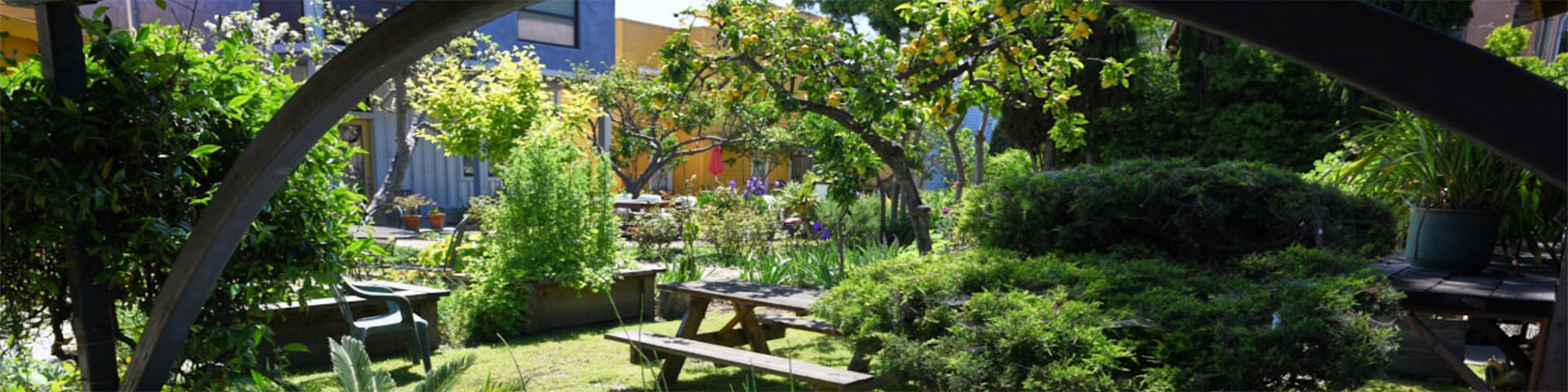
A garden at the Ranch. Credit: The Ranch at Dogtown
Located three blocks from the Bay Trail, The Ranch at Dogtown in West Oakland’s Dogtown neighborhood features a variety of nine buildings, from houses and apartments to cottages and lofts.
On 8,000 square feet of reclaimed land and surrounded by a tall gate, the community, established in 1990, features a central garden, a chicken coop and bees. The community has approximately 30 members who share the communal garden and taking care of the land.