It's hardly news that the East Bay real estate market has been growing at a steady pace. It continues to break all-time records. For example, in Q2 2021:
- Median price for single family homes is at an all-time high of $1,090,000, up 25% since last year.
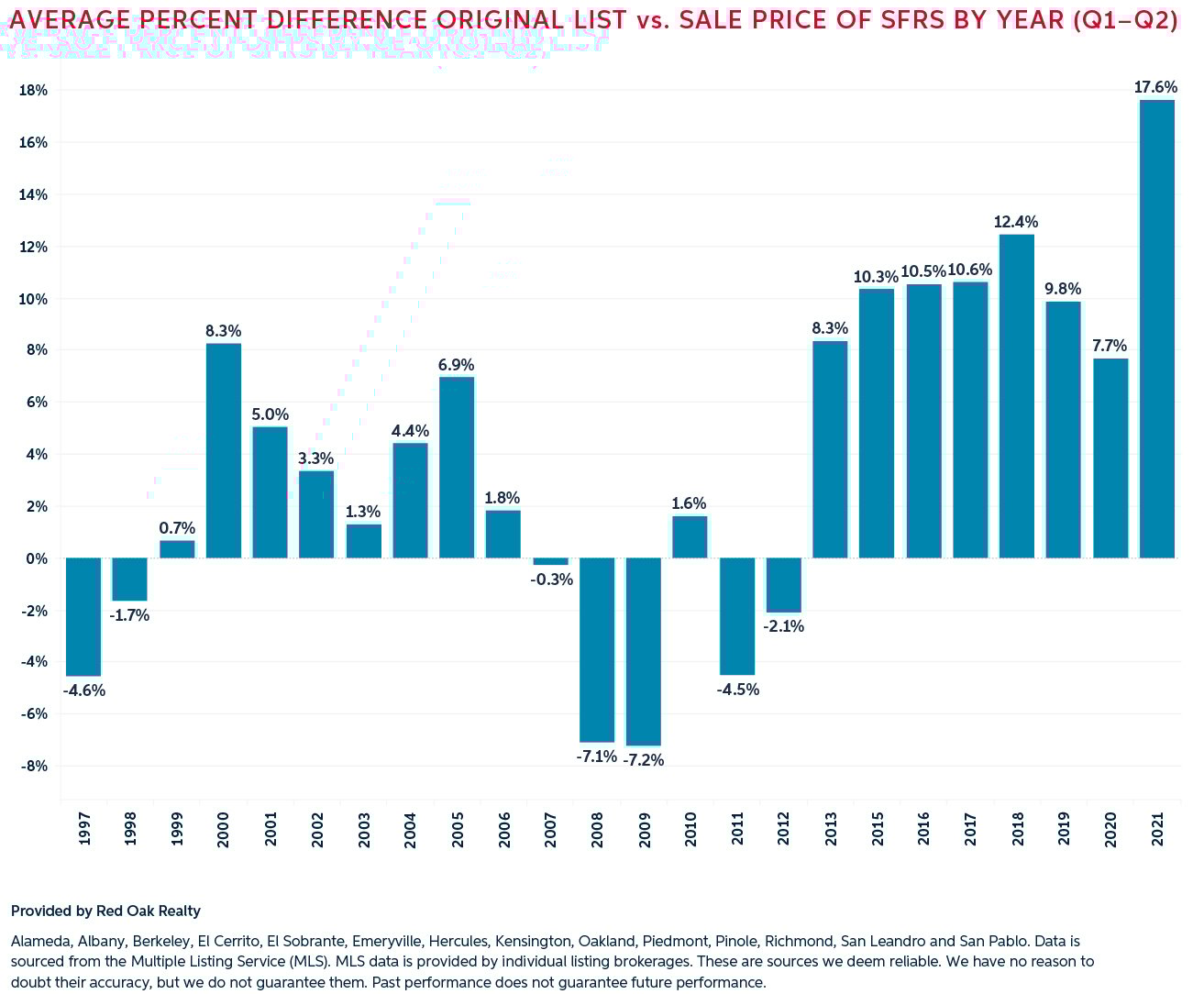
- Homes are selling at an average of 20.6% over list, the highest ever recorded.
- Homes are selling in an average of 15 days, the lowest ever recorded.
Interestingly, this recovery is similar to the years following the financial crisis, roughly defined as 2008-2013. For example, in Q2 2021 compared to one year prior:
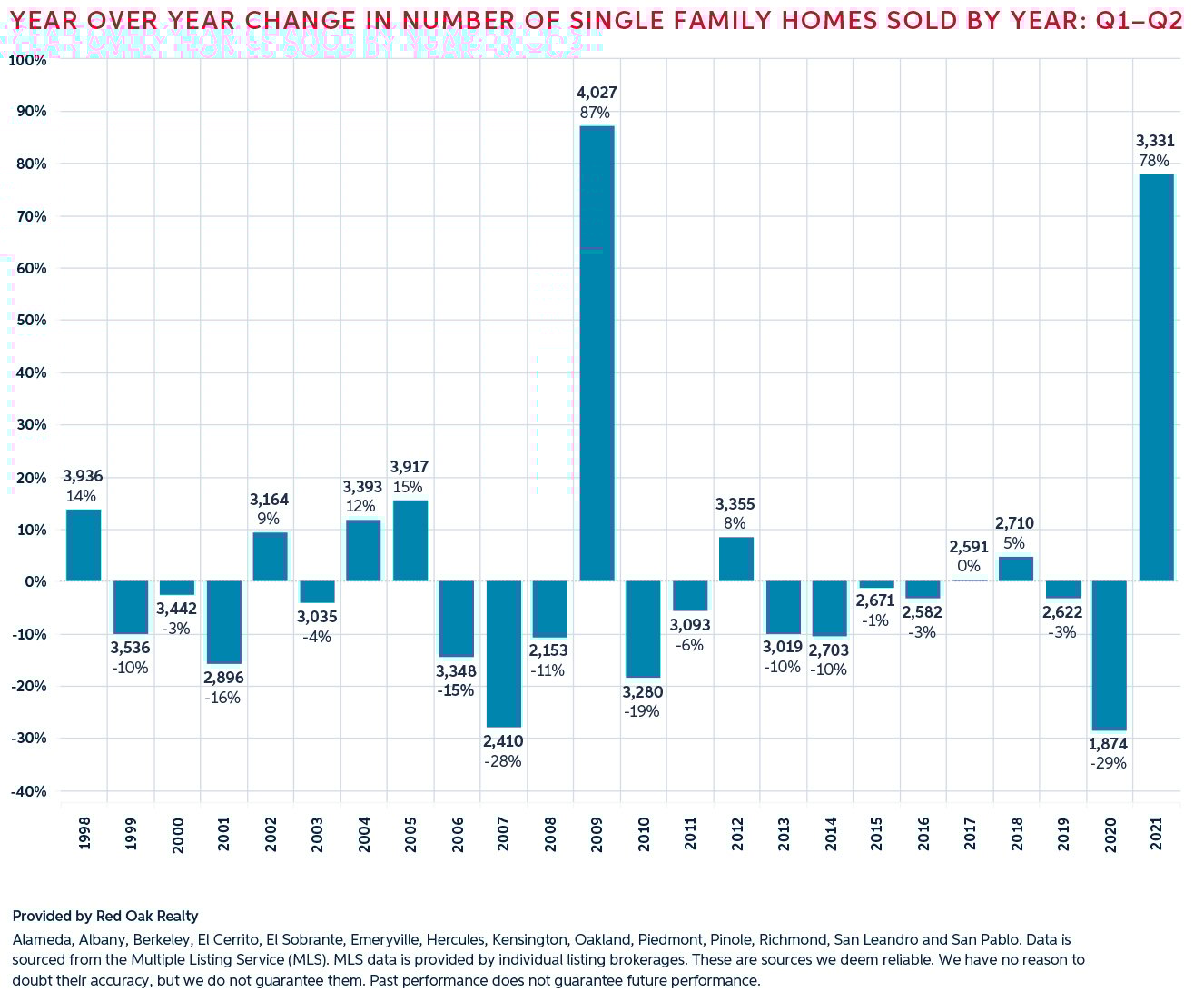
- The number of sales increased 95%. This is the highest level of growth since the financial crisis in Q1 2009 (145% YOY).
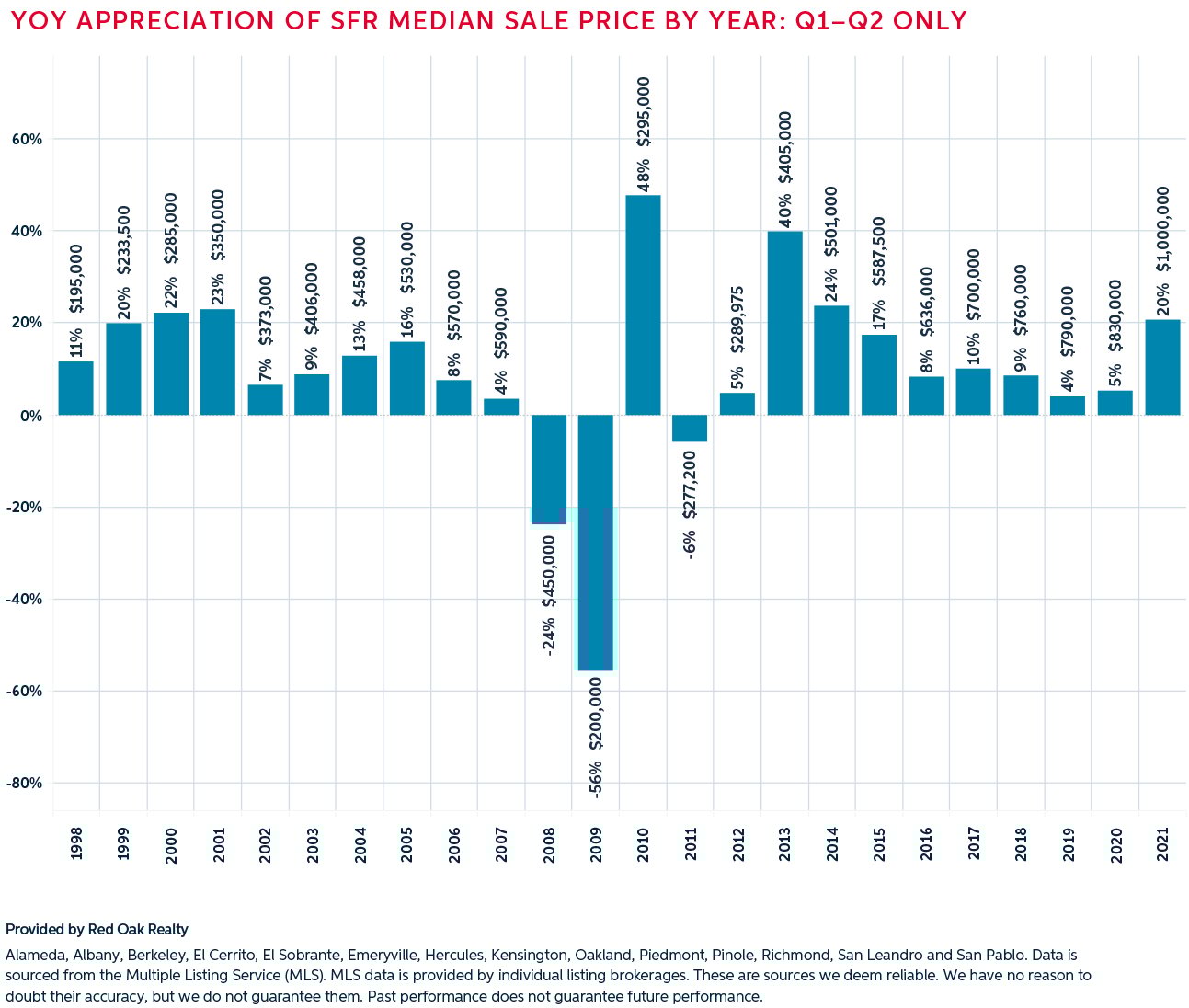
- Median price increased 25%, the largest growth since Q2 2010 (47% year-over-year).
The financial crisis and the pandemic experienced such similar recoveries, one could use historical trends to determine what the East Bay market has in store for us over the next few years. Here are a few predictions that might play out:
-
Prediction 1: The number of sales will decline after 2021. After the number of sales peaked in 2009, they steadily decreased for over a decade until the pandemic struck. This could have been because older generations are aging in place, and prices continued to increase and sellers had less incentive to sell and "move up," reducing inventory and increasing prices.
-
Prediction 2: The rate of appreciation will decline. Prices fell as much as 56% between the first half of 2008 and 2009. After recovering in 2013, the rate of appreciation continued to slow for 7 years. Similarly, the current buying frenzy will cool at some point, and sky-high prices will push more buyers out of the market, reducing the rate of appreciation.
-
Prediction 3: Homes will continue to sell over asking in a short period of time. While the market suffered during the financial crisis, it remained active through the pandemic, which reflects the resiliency of the East Bay. For example, homes sold as much as -7.2% below asking in the first half of 2009; in 2020, sales remained high at +7.7% above asking and skyrocketed in 2021. Similarly, homes were on the market an average of 50 days during the first half of 2008; in 2020 this metric didn't increase - it declined to just 22 days on market.
All said, there simply isn't enough inventory of available homes to meet the demand of today's buyers. This has been the case for over a decade and is likely to continue for the foreseeable future.
Do you agree? Disagree? Reach out to discuss or if you would like to see custom reports that affect your real estate goals.