
“The greatest danger in times of turbulence is not the turbulence—it is to act with yesterday’s logic.” - Peter Drucker
If you’re interested in buying or selling a home in the East Bay, it’s wise to pay attention to inventory levels and what drives them. Through the pandemic, with all the attendant anxiety, buyer demand surged and the number of homes for sale in the East Bay plummeted. Remote workers and household pods sought home offices and bigger yards.
At the same time the Federal Reserve kept the federal funds rate close to zero until the first quarter of 2022. Droves of homeowners refinanced their loans. The Fed was also buying billions of dollars of bonds to stimulate the economy.
When the measures of inflation could no longer be disregarded, the Fed moved rates upward amid doomsday headlines warning of a possible recession. Over the last year, the fed rate has increased more than five percentage points, driving up mortgage rates. Now that rates are higher, owners are locked into low rates and have little incentive to sell.
East Bay market activity is tied closely to interest rates: If you’re a buyer, your purchasing power is reduced; if you’re a seller, you’re worried about having to accept a lower sale price.
Historically, spring is high season for new listings. This year, after a winter of atmospheric rivers, inventory has increased, but later than expected and rising interest rates have dampened rapid price escalation in the East Bay market.
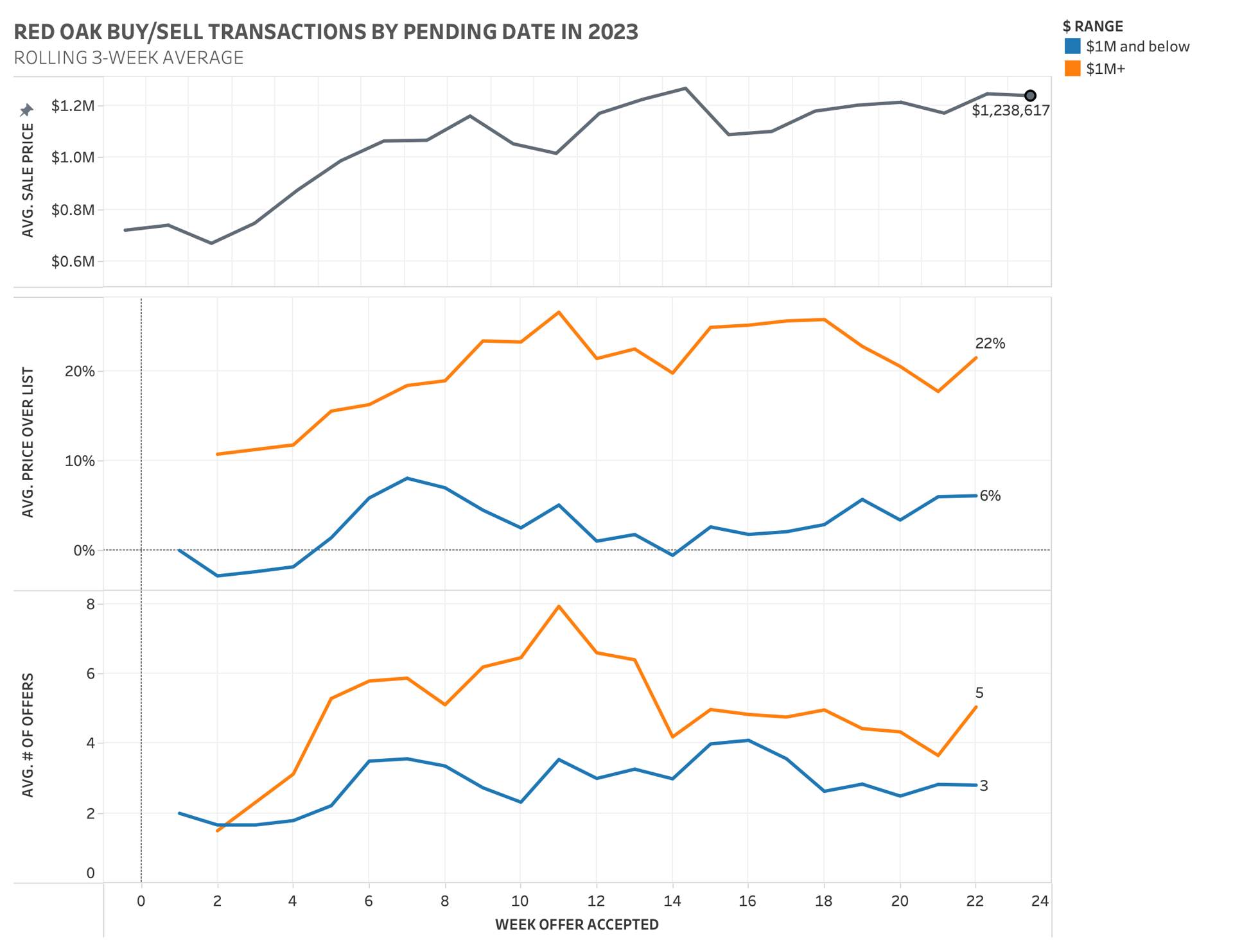
How will this affect your real estate objectives? As usual, it depends. Price appreciation and demand vary considerably depending on price point and of course, location. Data shows that home prices have indeed dropped since a year ago, but notably, bidding wars are still happening in certain areas with the most attractive homes that are move-in ready and priced well. For example, looking at recent Red Oak transactions by their offer date, properties that command a higher price - above $1M - are selling an average of 22% over list with an average of 5 offers, while properties below $1M are selling an average of 6% over list with an average of 3 offers.
Regulations have slowed and otherwise limited new construction projects for some time. Local jurisdictions, as well as California as a whole, are now busy reforming some of these policies. Explore these new residential developments using Red Oak’s interactive map below. It’s important to note that the vast majority of these developments are rentals, not for sale. It will be some time before the impact on housing availability is realized. Inflation is another dampening factor as building costs and the interest rates on construction funding continue to increase.
Through all of this, life continues to move forward. People still have compelling reasons to buy and sell homes. From a long-term historical perspective, interest rates are still on the low side.
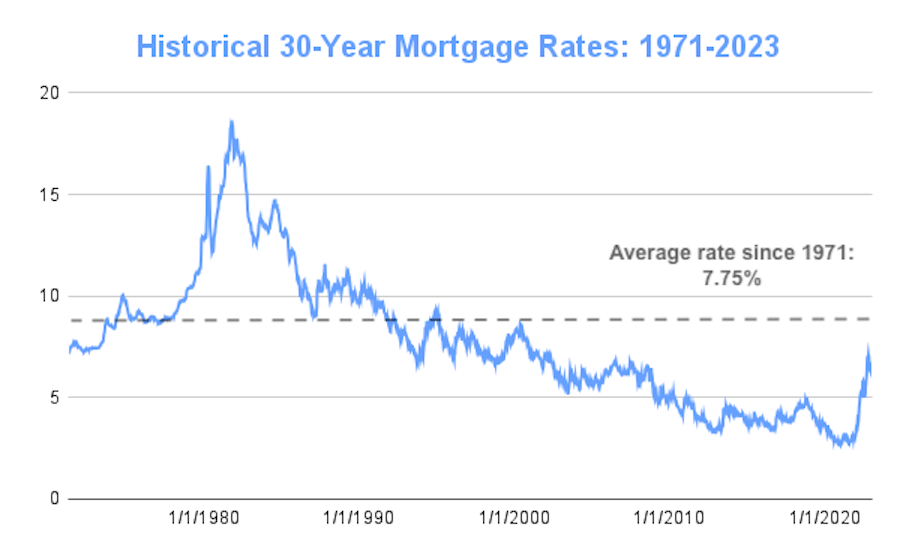
Source: The Mortgage Reports
Just like Jerome Powell, Red Oak loves data! We specialize in looking accurately at East Bay market trends. We also love answering questions and skillfully navigating uncertain conditions. If you would like creative solutions and sound advice with some solid numbers attached, reach out.