
As soon as Shelter in Place (SIP) went into effect on March 16, 2020, there was a notable shift in the real estate market. The change in supply and demand changed the behavior of both sellers and buyers. It also required real estate agents to quickly reconsider the norms that had been widely accepted for years.
One of the largest changes was the way the home was priced when it first came to market. Rather than list significantly below value, which had been the norm in the Inner East Bay, more sellers were offering “transparent pricing,” which priced the home at, or closer to, the expected sale price. The challenge was determining exactly how this number would relate to both the final sale price and the expectation of buyers and their agents.
List Price as A Marketing Tool
Although one would expect that the list price is simply the seller’s expected sale price - in other words, the expected value of the property - it is far more than that. Instead, it is a marketing tool that can attract different quantities of buyers, and therefore more or less competition, depending on how the list price relates to the expected sale price.
For example, using a market analysis tool (only available Red Oak agents), we find that a 5% increase in the list price of a home in Berkeley can reduce the number of potential buyers by 19% (as determined by their search criteria).
A Change in Strategy
In the first weeks of 2020, before SIP, homes were selling an average of 11% over list price.* Most buyers adjusted their search criteria to 11% below the expected sale price in order to focus on homes that fit within their budget.
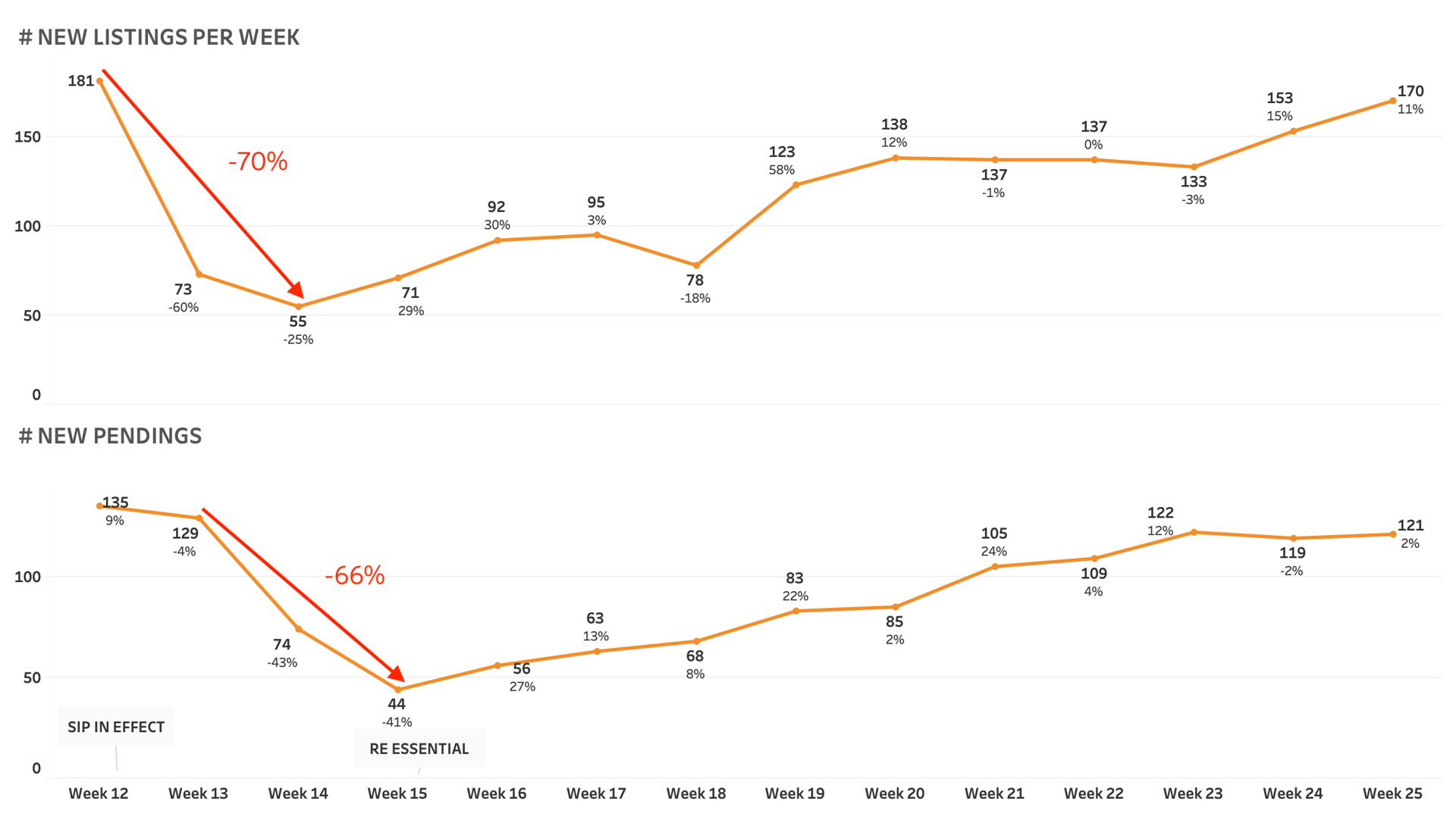
But when SIP went into effect, the number of new listings introduced each week fell by 70% and the number of new contracts written each week fell by 66%.** In other words, supply and demand experienced a monumental shift. Many sellers didn’t know whether there would be any buyers at all for their property.
So rather than do this pre-arranged dance of listing below value, many sellers (wisely) decided to play it safe. They listed their property at the expected sale price and specifically told buyers that this is “transparent pricing.” In other words, they could write a contract at the list price and could potentially get into contract with no counter.
However, as time has worn on, this has not always been the case. In several instances, sellers used “transparent pricing,” but several buyers would write offers. No longer could the buyer simply get the property “at asking” - they needed to expect a counter offer or write their offer at a higher price. Some buyers didn’t receive a counter at all! All of a sudden, “transparent pricing” didn’t seem so transparent.
Now that we have been in some form of SIP for over 3 months, real estate norms are starting to settle. An analysis of Red Oak transactions found that since SIP went into effect, properties are attracting multiple competitors: homes are selling an average of 7% over list price with an average of 3 offers. We’ve seen some listings attract over 20 offers! With this type of activity, transparent pricing might be a factor in some cases, but not in most.
If you’d like to discuss your buying or selling strategy, feel free to reach out.
* Source: MLS. Single family homes sold through May 2020 in Alameda, Albany, Berkeley, El Cerrito, El Sobrante, Kensington, Oakland, Piedmont, Pinole, Richmond, San Leandro and San Pablo
** See notation above. Declines took place over 2 weeks.