East Bay Market Update: July 2020
The East Bay real estate market has surged. In many ways, buyer and seller activity is higher than 2019 levels. That’s pretty impressive considering where we were just a few months ago.
Before we get into the data, let’s ask: why would people transact during such uncertain times? The Bay Area has proven incredibly resilient when it comes to job creation, and the people who have been mostly affected by recent job losses are not the same people who are most likely looking to purchase property.
Many East Bay buyers are those who are more secure in their financial scenarios and are looking for more space, like outdoor areas and home office space. Many of their employers are offering extended or permanent opportunities to work from home. This is why Tahoe is running out of homes to sell and San Francisco vacancy rates are skyrocketing.
The East Bay is benefitting from these changes, too. Here’s how it’s showing up in the data.
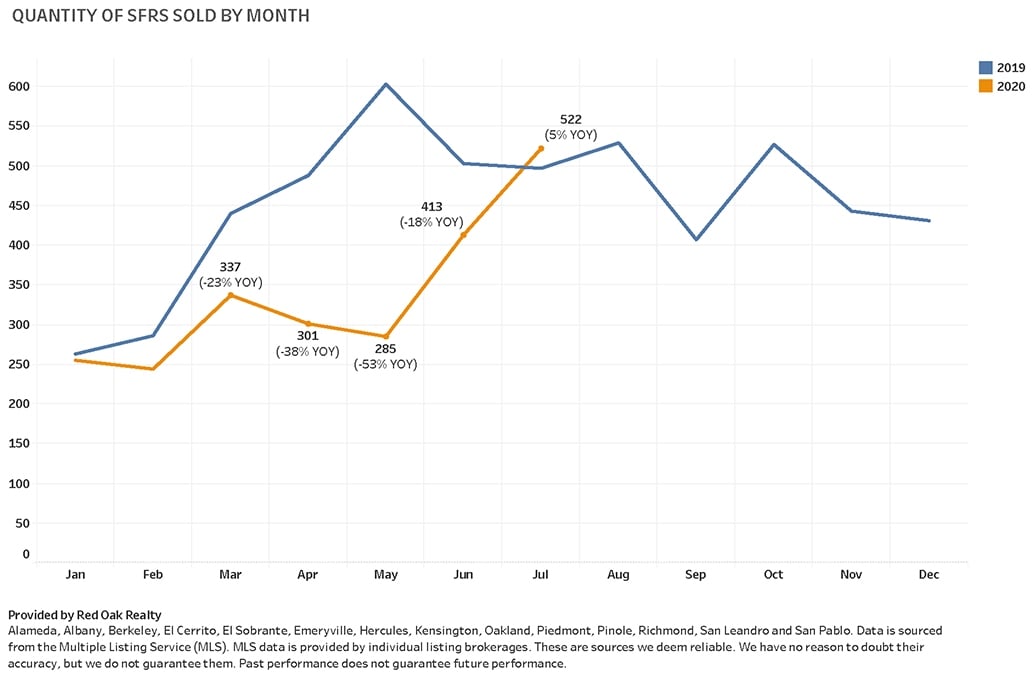
Back in May, the number of transactions had crumbled to a 53% decline since last year. But by last month, activity spiked and sales in July were 5% HIGHER than last year.
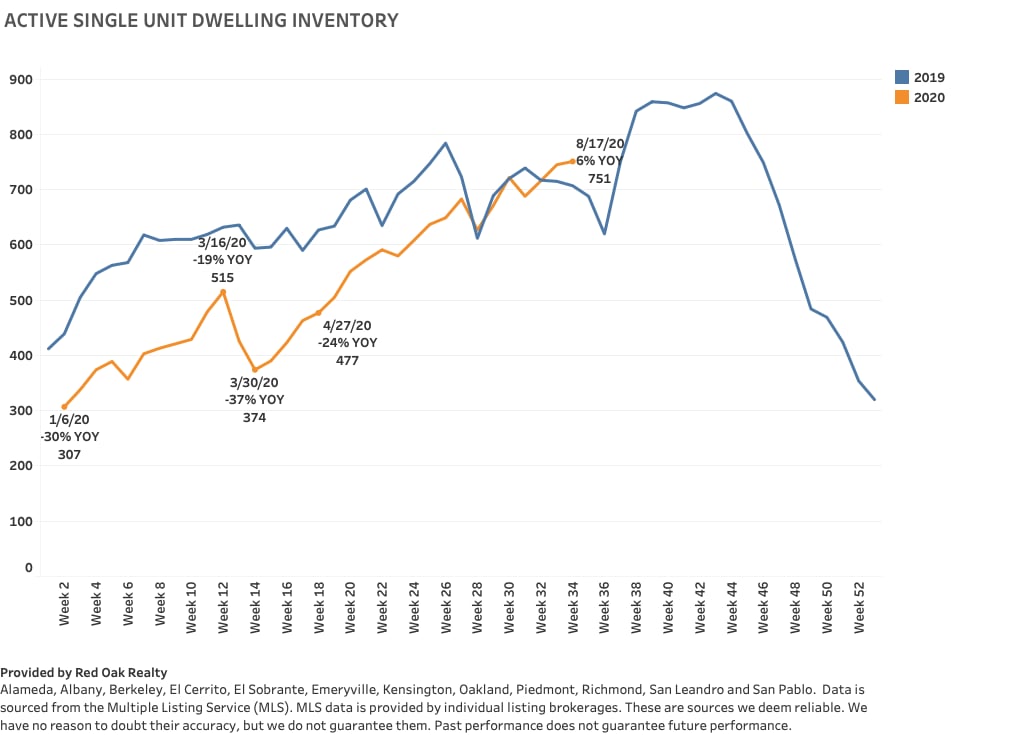
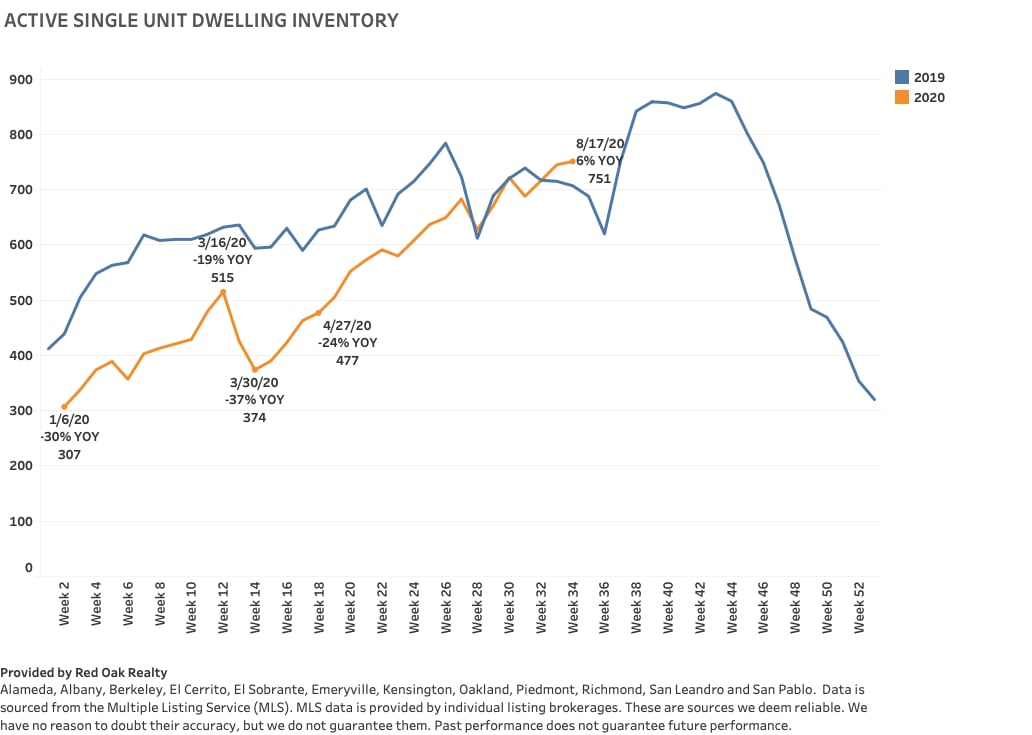
The key driver is that the number of homes for sale has increased dramatically. Active inventory started the year 30% below 2019 numbers. Just before real estate was deemed an essential business on 3/31, inventory bottomed out at -37%. But as of Monday 8/17, inventory was UP 6%. What a year it’s been.
Even with the increase in available homes, there is clearly pent up demand as buyers absorb the additional inventory. If anything, the pace of the market has INCREASED with at least one Red Oak transaction receiving 15+ offers each week.
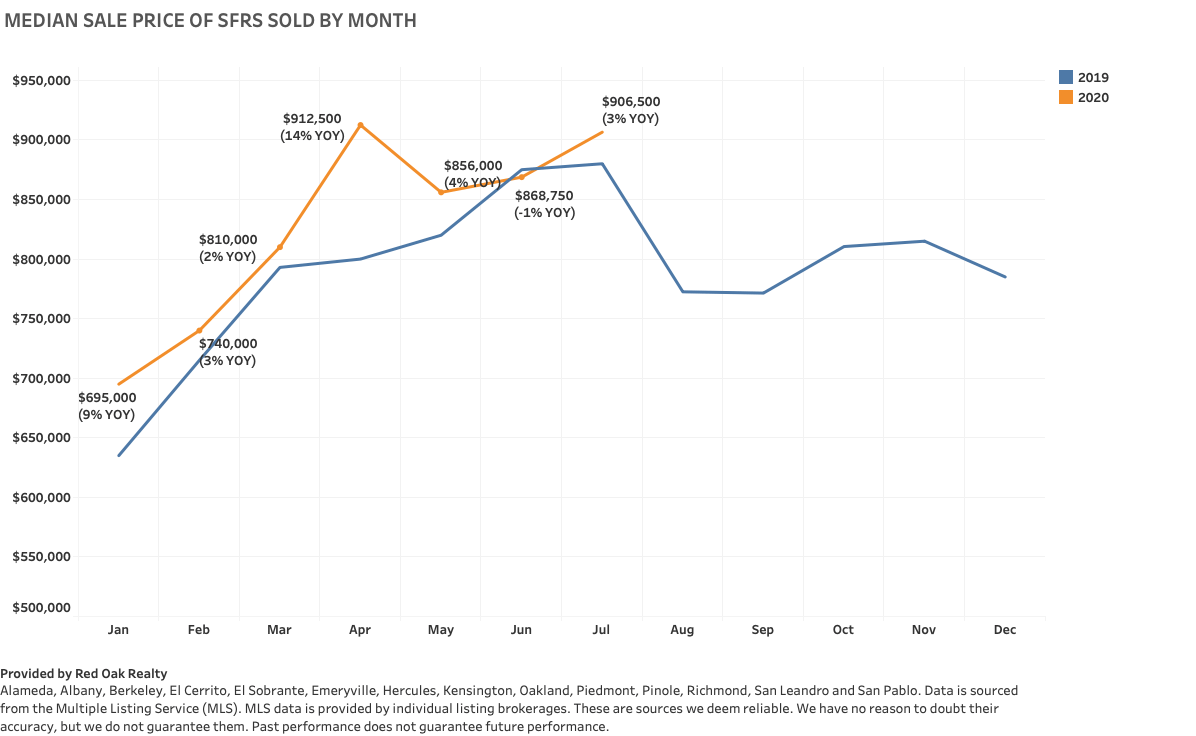
This has kept prices aloft: the East Bay’s median price has been above last year’s numbers every month except one.
The number of homes under contract has continued to grow, with “pending listings” now 26% above last year’s numbers. (When you think that just four months ago the market was DOWN 37%, it makes the increase that much more impressive.)
So what’s next? We expect that the flood of new listings after Labor Day will not happen to the same extent because of the dynamics caused by COVID. However, the election is less than 100 days away. How will that affect the market?
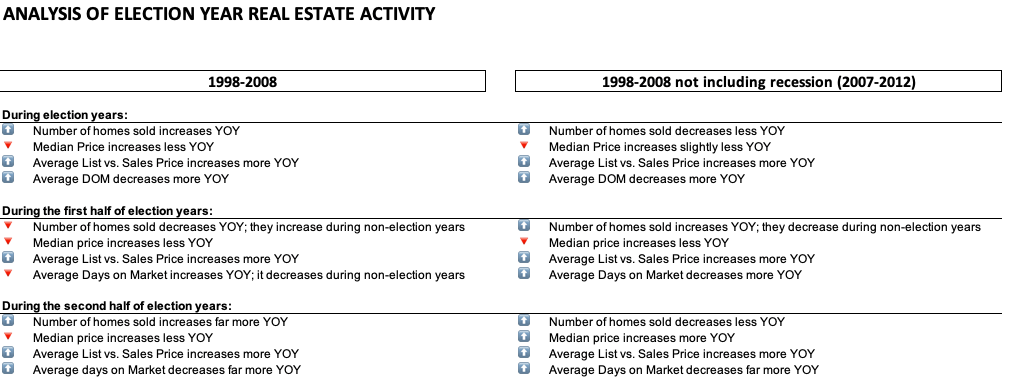
Based upon Red Oak analysis, we have found that prices do not increase as rapidly during election years. Looking back through 1998, this appears to be the case in all years, whether you include the recession or not.*
However, we do NOT expect this to be as much of a factor this year, again due to other factors, including COVID and the shift to working from home.
How does this data affect your situation? Contact us and let’s discuss.
* Source: MLS. SFRs sold 1998-2018 in the "Inner East Bay": Alameda, Albany, Berkeley, El Cerrito, El Sobrante, Emeryville, Hercules, Kensington, Lamorinda, Piedmont, Pinole, Richmond, San Pablo and San Leandro.