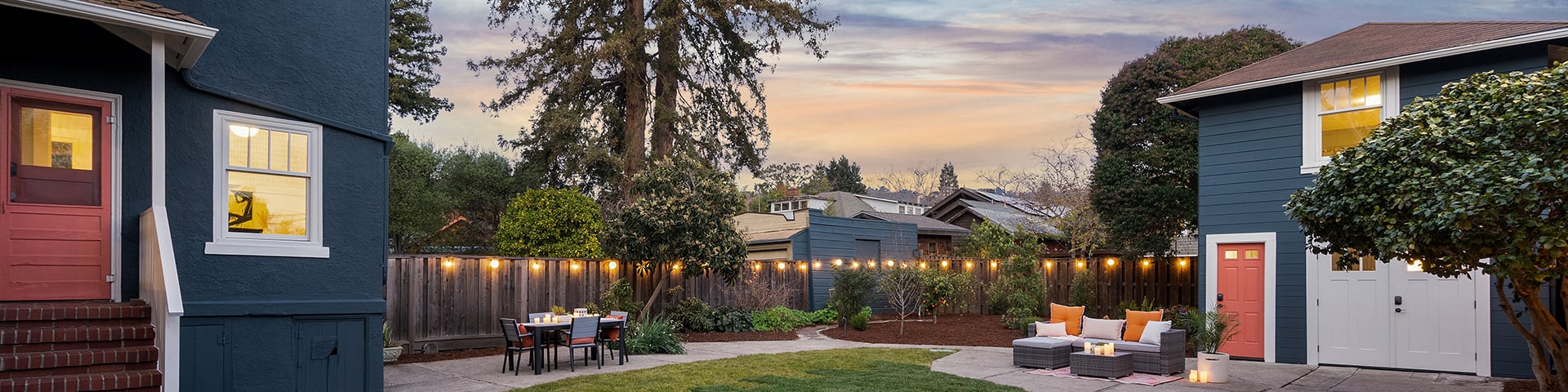
Senate Bill 9, also known as the HOME Act, was signed into law by Governor Newsom in September 2021 and went into effect this past January. This new legislation aims to simplify and expedite homeowners’ ability to create infill housing. It allows the addition of a second dwelling on an existing lot or the subdivision of that lot. Following the subdivision, two units may be constructed on each of the new lots. Since these parcels were initially zoned for single family homes, the potential to add much needed housing stock in the East Bay is clear. According to the Terner Center for Housing Innovation at UC Berkeley, the law could create up to 700,000 new units.
SB9 directs “ministerial approval” for this type of development. This is a streamlined permitting process, theoretically involving no personal judgment by local jurisdictions. This means no public hearings are required, which limits uncertainty, costs, and an overly long process. Approval can be obtained in as little as 90 days.
It’s easy to see the potential benefits: A family property could be divided, allowing residents to stay in the area. Empty nesters could gain rental income by converting a large home into a duplex.
Of course, there has been backlash. Some see this legislation as “the end of single-family home zoning” and some cities have crafted local ordinances that seek to stymie these projects. The Peninsula enclave of Woodside declared the entire town a protected habitat for mountain lions (a potential lawsuit ended that attempt). At the moment, both Alameda and Contra Costa counties are aligned with the state’s requirements.
A Few Guidelines for Subdividing or Adding a Unit
- Two homes may be created on an eligible parcel, whether the proposal adds up to two new residential units or one new unit to one existing unit.
- Subdivided parcels must be for residential use only.
- If a subdivision is done, the subdivider must intend to occupy one of the units for a minimum of three years. Community land trusts and qualified nonprofits are exempt from this requirement.
- Each new parcel must be approximately equal, e.g. one parcel must be at least forty percent the size of the original parcel.
- No parcel can be less than 1,200 square feet, unless the county adopts a smaller minimum lot size.
- There are limits on adjacent lot splits which aim to limit corporate developer overreach.
- There are specific requirements that protect historic districts, environmental quality, and existing tenants who might be displaced.
Financing
Funding a project newly allowed under SB9 is different, and possibly more challenging, than a typical mortgage.
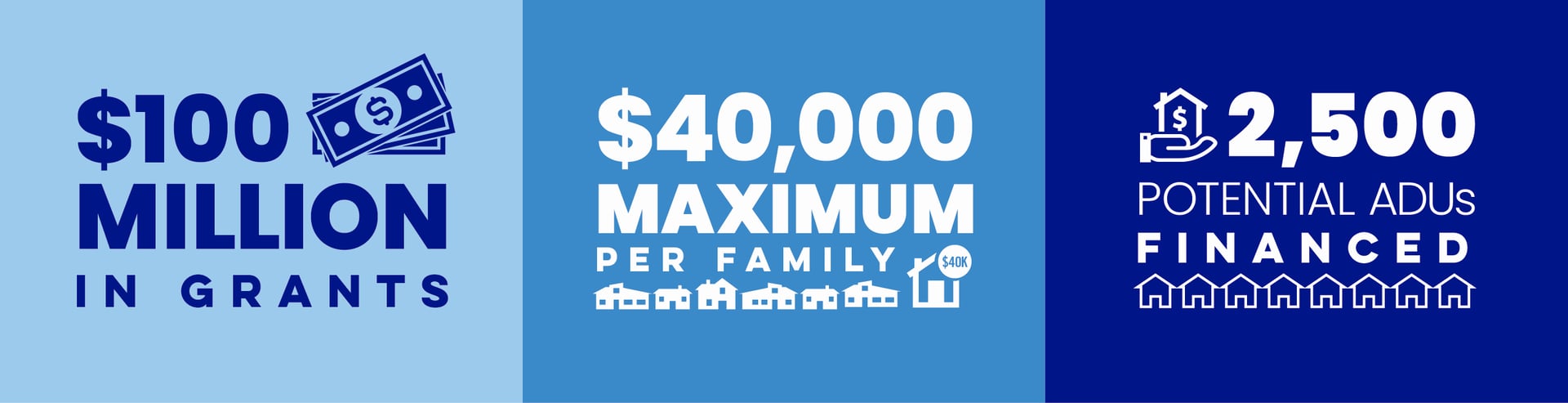
CalHFA offers grants for ADUs to those with low to moderate incomes. It provides up to $40,000 to reimburse costs associated with pre-development and non-recurring closing costs. Depending on the locale, this might include site prep, design work, permits, soil tests, impact fees, property surveys and energy reports.
Using cash is common. Adding an ADU is often done to accommodate older family members, and if they have recently sold their long-time residence, there may be funds available to combine and reinvest. Other options include a HELOC or home equity loan, a cash-out refinance or a renovation or construction loan.
At the federal level, Fannie Mae and Freddie Mac now allow homeowners to qualify for a loan based on projected ADU rental income.
We would love to help you determine if this is a good way for you to develop your East Bay property. If you’re curious, or looking for resources and options, we’re here to guide you through it. Reach out.