Accessory dwelling units (ADUs) – aka in-law suites and secondary units – are immensely attractive to East Bay homeowners and homebuyers. They allow residents to comfortably host guests or family members, develop studios or generate income as short- or long-term rentals.*
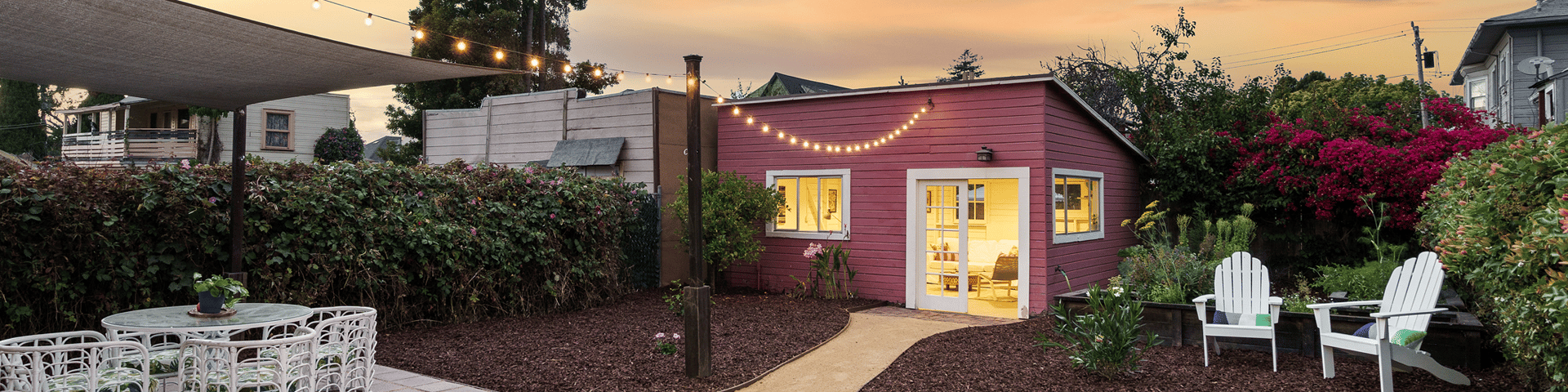
Defined as a dwelling that provides complete independent living, eating, cooking and bathroom facilities located on the same lot as an existing single-family home, ADUs come in two types: detached, such as a casita in the backyard; and attached, such as a converted attic or backroom connected to the main house. These units are used for everything from art studios to rentals to guest houses.
ADUs can be appealing to communities as they facilitate the development of diverse housing types, add to rental stock, increase affordability by lowering rental housing prices (in some cases), and provide more opportunities for families to age in place. However, ADUs also come with a fair share of controversy as communities grapple with ensuring they improve (or at least do not detract from) residents' quality of life.
ADUs can affect neighborhood density and, if cities allow owners to use them as short-term rentals (through sites such as Airbnb or VRBO), they can increase traffic and busy-ness in settled neighborhoods. Many cities strive to make sure that their ADU policy maintains neighborhood character intact and minimize the impact of short-term rentals so that parking and high-turnover visitors don't disrupt neighborhood security or safety.
Some of the ADU policies of the five Inner East Bay cities covered – Oakland, Berkeley, San Leandro, Alameda and Richmond – are similar. For example, each city allows only one ADU per primary dwelling, does not allow ADUs to be sold separately from the main house and stipulates that ADUs must appear subordinate to the primary home. City policies and zoning laws vary on whether owners must live onsite, whether ADUs can be used as short-term rentals and on other details. Homeowners should always verify with the city as these laws and restrictions are often changing. Also note that an ADU almost always requires a permit.
In 2020, a new law stopped local governments from limiting the number of permits for new homes, among other things. In effect until 2025, the law requires cities and counties to reduce the time it takes to process permits for housing that meets the local government’s existing rules. The bill also prevents local governments from imposing or enforcing a moratorium on housing development.
As a result, adding an in-law unit in the home or backyard became a little easier in 2020. Five new laws were put in place in order to speed up and make the process easier to add an ADU. One of the laws exempts ADUs from most of the fees charged by cities to offset the costs of providing services to them. In addition, homeowners can now build up to two ADUs on their property* (within the regulations).
Reach out if you have any questions about ADUs or need recommendations of architects or designers familiar with ADUs.
*Verify with your city and rental board.