
In early 2022, the Inner East Bay real estate market reached all-time highs, creating a flurry of activity for buyers and sellers. But then the U.S. economy faced new headwinds: in order to keep rising inflation at bay, the Fed undertook steep increases in interest rates, which led to steep increases in mortgage rates and more layoffs in the tech market.
The local market began to experience these changes in early summer, when buyer activity slowed significantly (and everyone seemed to leave town and visit Europe). This beginning of this shift could be seen in July data, and the slowdown has accelerated through September. As a result, the median price of a single family home in the East Bay has fallen 21% between July and September, while it sits 4% lower than the previous year, it is higher than all years prior.
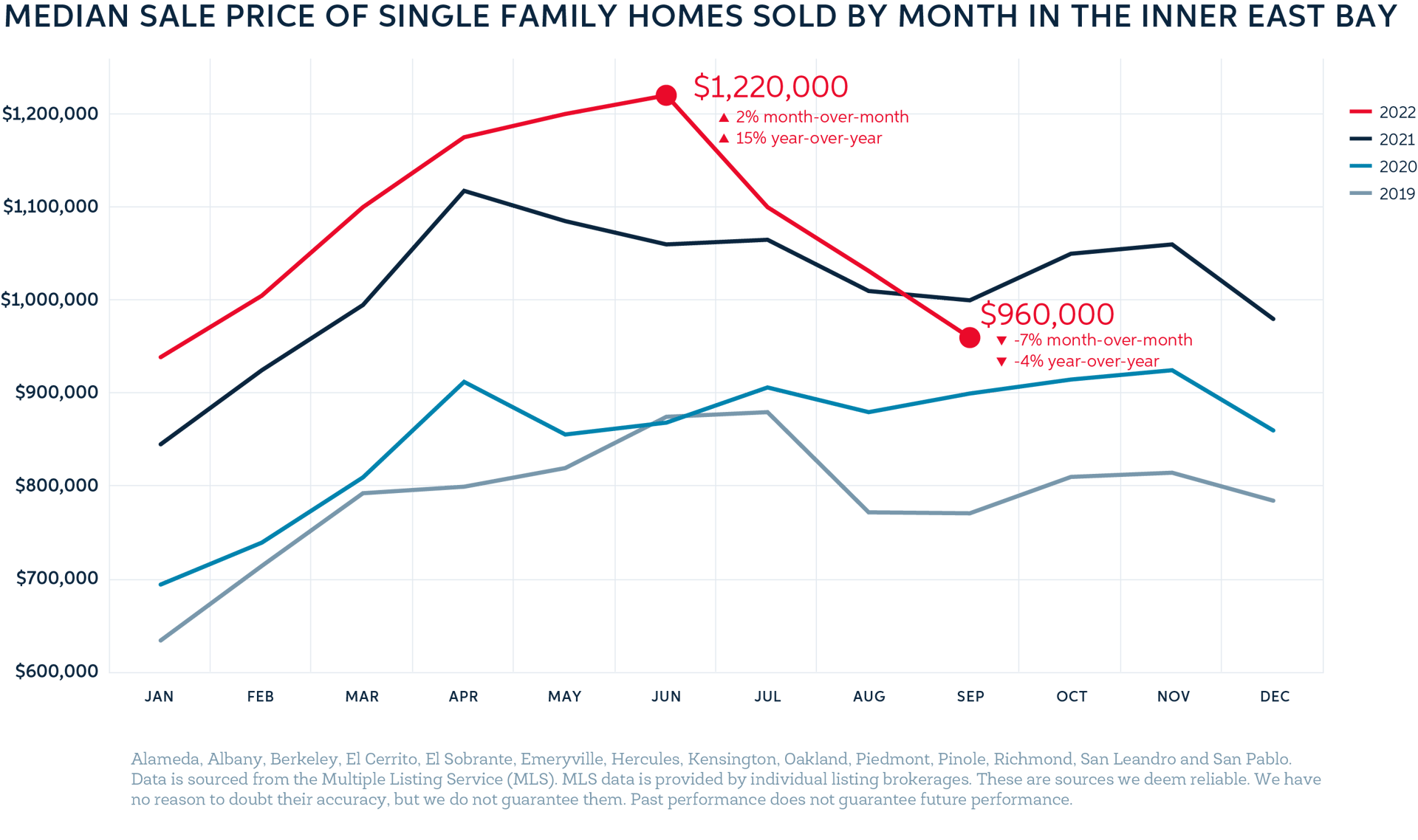
After homes sold an average of 26% over asking in April, an all-time high, homes are selling closer to asking at an average of 9%. This is good news for buyers who can take advantage of some of the strongest buying power this market has experienced in a decade.
As a result, one might say that 2021 was the party and 2022 is the hangover, but the story is not quite as simple as that. Not all homes are facing the same challenges. Lower-priced homes - those selling below $1M - make up 41% of the total market and face the greatest challenges, with 28% requiring a price reduction before selling and spending an average of 26 days on the market. However, homes that sell between $1M and $2M continue to be in high demand, with about half of homes selling 20% or more over asking.
Similarly, Berkeley homes continue to be in high demand, selling 21% over asking. And in-demand neighborhoods remain hot, like Rockridge ($1.8M median price in Q3 2022, up 13% YOY) and Richmond Annex ($860,000, up 6%).
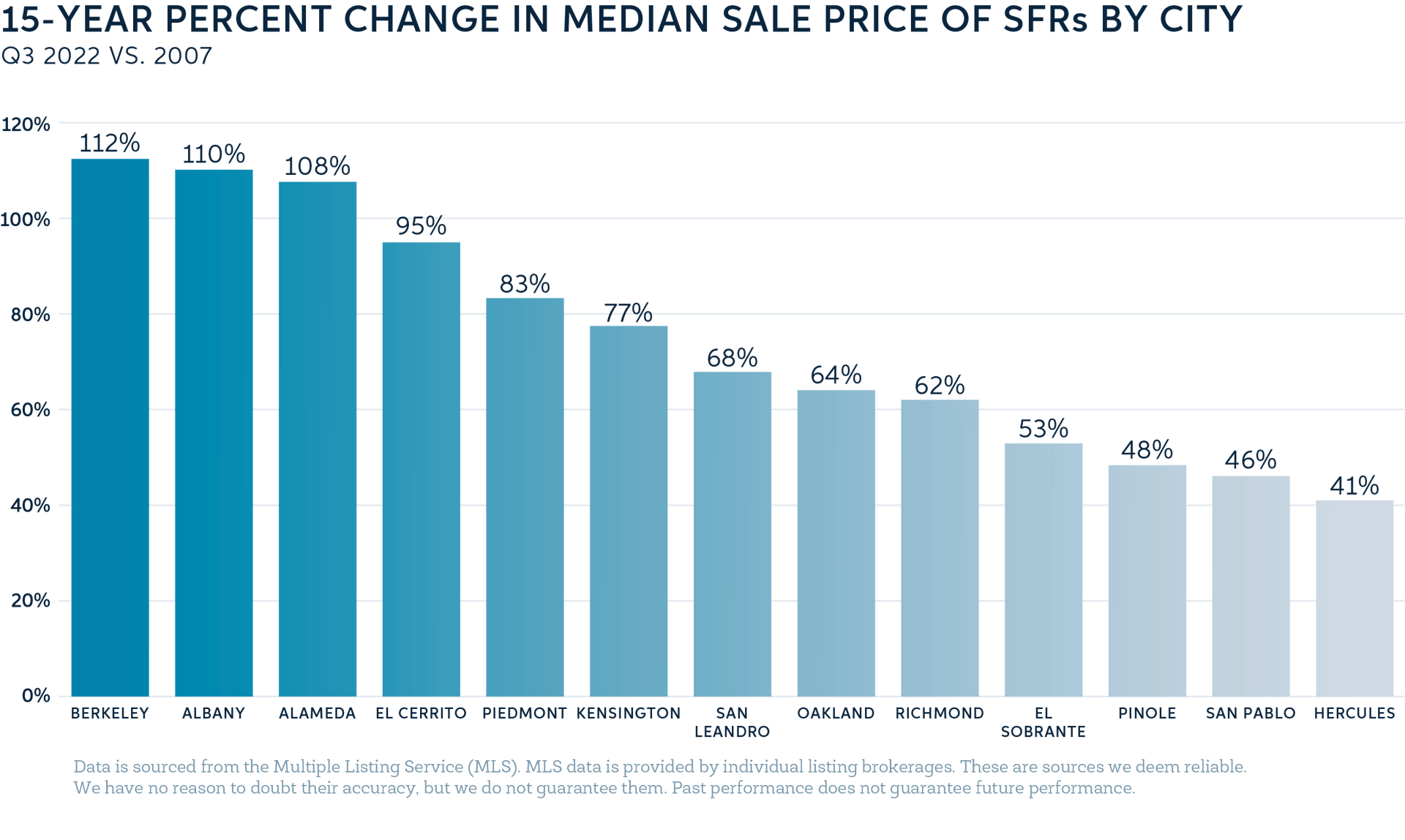
It’s important to remember that we’re comparing the current market to the pandemic market, which was an anomaly by all measures. Even with the current downturn, the market is behaving similarly to 2019. And if you purchased prior to 2020, your home has likely appreciated. In fact, if you bought 15 years ago, appreciation averages are between 41% and 112%.
Looking Forward
As expected, new listings flooded the market after Labor Day, and many of those listings will be closing in October. When these numbers become available in a few weeks, we expect sales volume and price to tick up over September. Beyond this, the future is anyone’s guess. Some project that the slowdown will continue through the end of the year, but buyer activity may pick up again at the beginning of 2023. Others think the slowdown will continue through Q1 but will pick up in the spring.
If you are considering buying or selling in the coming months, reach out so we can see the best ways to meet your short- and long-term goals.