
Real estate contingencies can be used when there is an offer to purchase a property. They allow one party to cancel the sale without penalty if certain conditions aren’t met. These generally fall into 3 categories:
- An inspection contingency allows the buyer to have the property inspected by a professional and negotiate repairs or credits based on any negative findings. This contingency can protect the buyer from purchasing a property with hidden or unknown defects. If unacceptable issues are discovered after the contingency period has expired, the buyer may forfeit their deposit if they cancel the transaction. Buyers also have time to review any HOA documents and the title report.
- An appraisal contingency allows the buyer to back out of a contract if the property's appraised value is lower than the contract purchase price. This contingency can protect the buyer from overpaying for a property. If the appraisal comes in lower than expected and the buyer is unable or unwilling to come up with the additional funds required to cover the difference, there is an opportunity to negotiate a price reduction.
- A financing contingency allows a buyer to cancel the contract if they are unable to secure financing for the property. It protects the buyer from losing their deposit if the specified terms of the loan can’t be met by the lender. This contingency can also benefit the seller, allowing them to cancel the contract, retain the deposit and put the property back on the market if no financing is approved by the set date.
The buyer’s deposit or earnest money may be retained by the seller if a buyer defaults on the terms of the contract. As a result, contingencies are important and can help to strike a balance between certainty and risk.
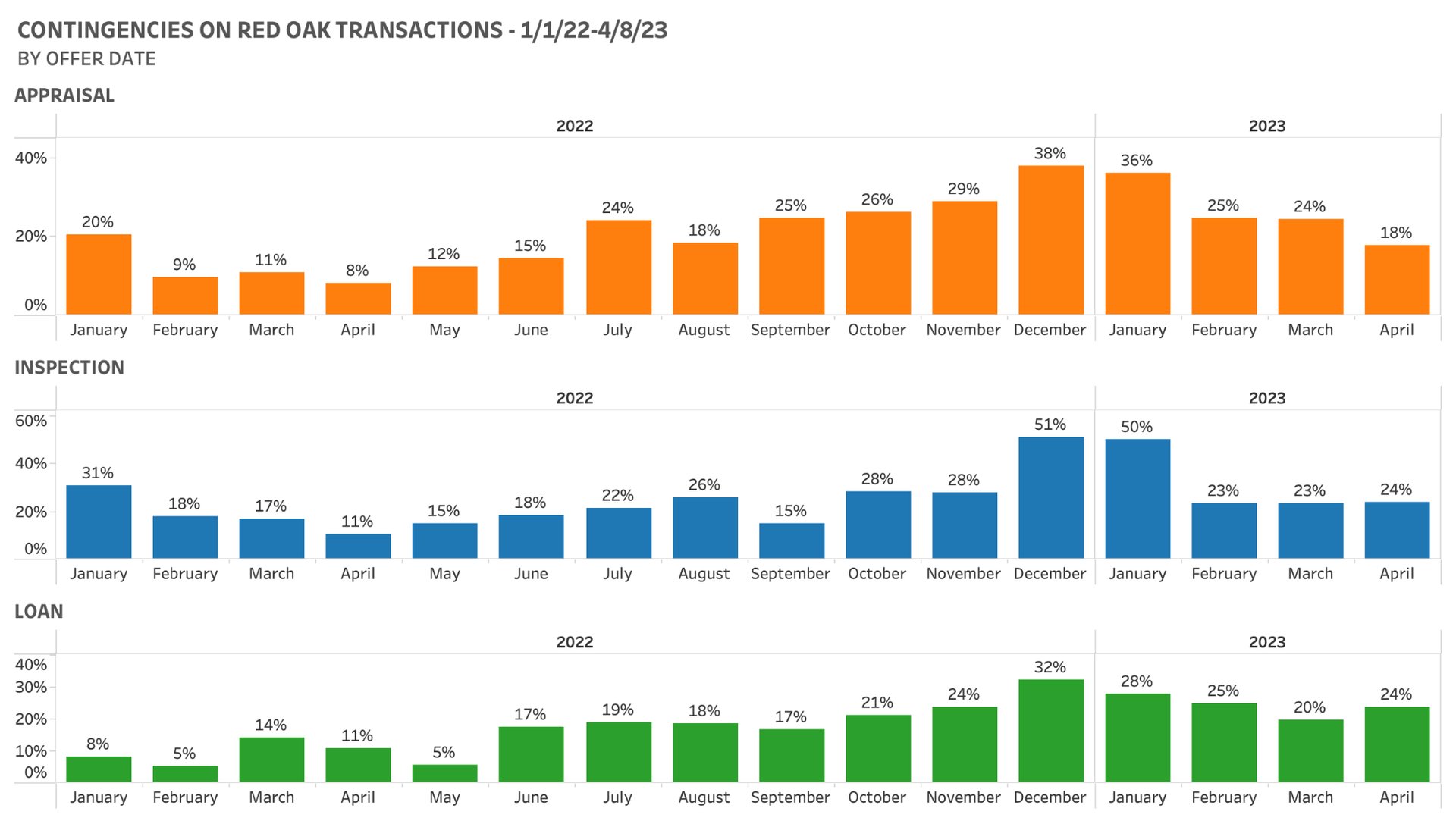
In the East Bay, the use of contingencies decline when it’s more of a sellers’ market, and they rise when it’s more of a buyer’s market. You can see this in the chart below, which reflects the use of contingencies for Red Oak transactions since January 2022. However, even in the strongest buyers markets, such as the winter of 2022, less than half of transactions use a contingency.
Since it’s in the seller’s best interest to minimize offers with contingencies, it’s prudent to include current professional inspections and complete disclosure documents at the time the property is listed so potential buyers have a clear idea of the house’s condition before making an offer.
The importance of qualified professional guidance is more important than ever. Individual situations will determine the best way forward for both buyers and sellers. We rely on accurate, up to date, and personalized statistical analysis to facilitate your real estate objectives. Contact us with any questions or for an evaluation of your unique circumstances. We’re happy to help.